Ready-made stain is convenient. A colour strategy needs more
A ready shade helps close a simple order. Factories, workshops, and designers also need colour control: repeatability, adjustment, and their own project palette.
Ready-made stain solves quick tasks
In furniture, door, and panel production, colour is often treated like a consumable: choose a stain from the supplier catalogue, make a sample, show it to the client, and start the job. It is convenient, especially when the task is standard and the deadline is tight.
The weak point appears later: the manufacturer does not own the colour. A competitor can show the same palette. A similar shade can be replaced with material from another supplier. If a colour is easy to copy elsewhere, it stops being an advantage.
Ready-made stain has strategic limits
A ready-made stain works well for standard shades and fast orders. Risk appears when a manufacturer builds the whole colour strategy around a supplier palette.
Wood colour comes from the whole system: species, solid wood or veneer, sanding, application, solvent, binder, primer, topcoat, and gloss. The same shade can look different on oak, ash, beech, pine, or veneer from another batch.
Serial production needs control
For production, the main value is repeatability. Fronts must match each other. A door leaf, frame, and trims cannot drift into different shades. A new batch has to match the approved colour, not depend on how the stain behaved that day.
compare a new veneer or solid wood batch with the approved master sample
add a warmer, cooler, brown, black, or white component
record the recipe for the substrate, application method, and finish
What a concentrate system changes
Batch repeatability
The colour is checked against a master sample and adjusted before the batch starts.
Adjustment for wood
The formula can be adapted for oak, ash, beech, pine, solid wood, or veneer.
Project-specific colour
A workshop can match a shade to flooring, stone, textile, a door sample, or an interior reference.
Formula instead of guessing
The recipe records components, proportions, substrate, application, and topcoat.
How colour becomes a process
A strong tinting system gives production control over the process: colour uniformity, pore expression, drying speed, application method, decorative effects, and repeatable formulas.
01Master sampleThe team approves a real sample with the chosen substrate and finish.02TrialThe colour is tested on the new wood or veneer batch.03AdjustmentThe formula is adjusted for the real substrate and application method.04RecipeComponents and proportions are recorded for repetition.05Production batchProduction receives a repeatable colour recipe for the next batch.
For serial production
A concentrate system gives repeatability, adjustment for material batches, and a clear process card for the finishing line.
For workshops
A small-batch producer can move beyond the catalogue and offer a shade for a specific project.
For designers
Wood colour can be developed together with stone, metal, textiles, walls, and light, instead of forcing the interior to fit a supplier palette.
What ICA INK is for
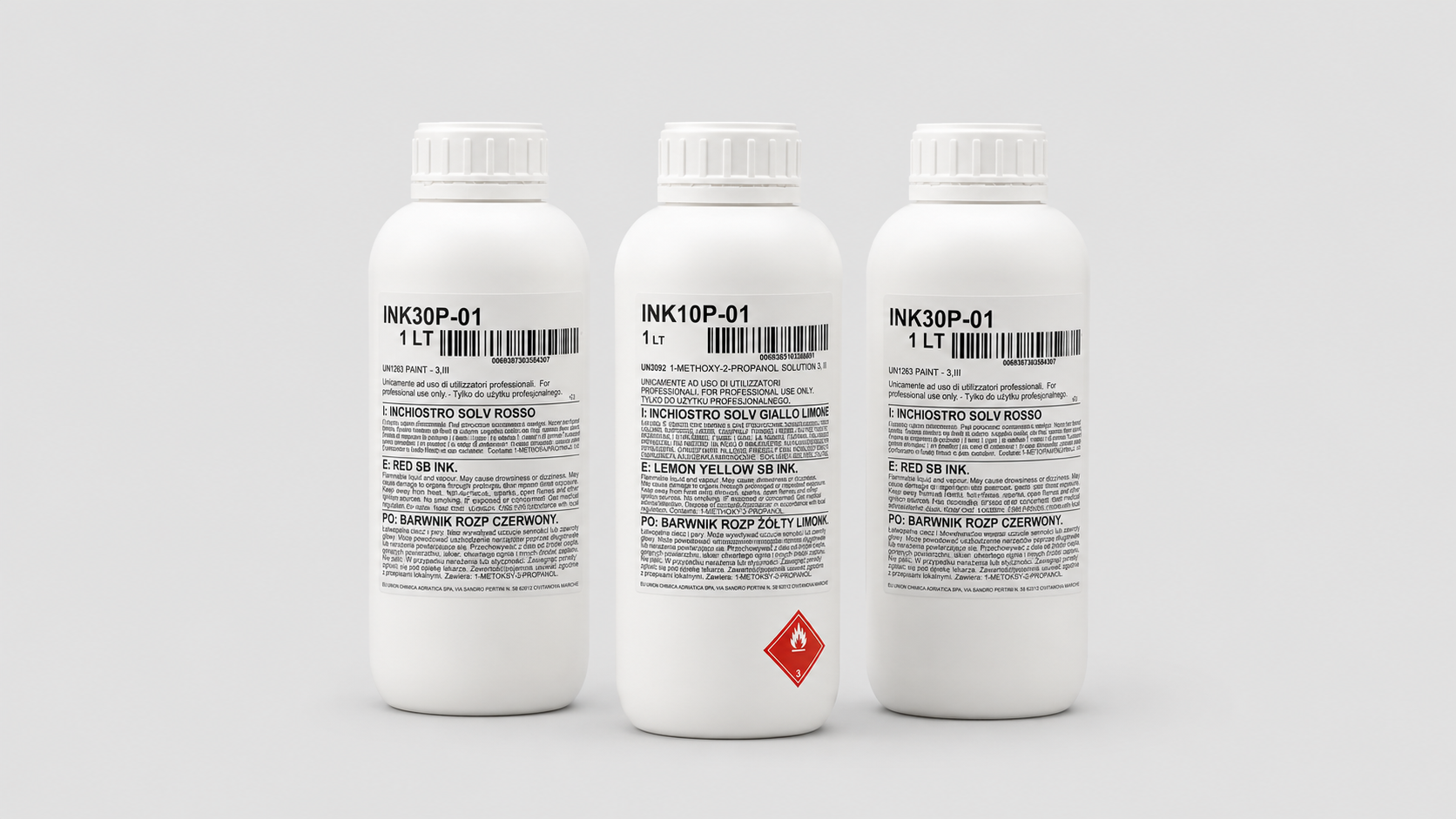
ICA INK is a system of highly concentrated solvent-based dyes for building custom wood colours in production and project work.
This base can be used for natural wood colours, grey and beige tones, dark shades, pastel solutions, glazes, patinas, and decorative effects. The point is not only to make a good sample, but to record the formula: components, ratios, wood, application, and finish.
The INK technical data also notes excellent transparency, good penetration, and good lightfastness. Listed applications include kitchen and furniture fronts, interior finishing, panels, wooden floors, and doors. The material must be mixed thoroughly before use.
A supplier catalogue is a start. Your own shade system is a strategy
Ready-made stain remains a useful tool. But when colour has to sell the product, repeat across a batch, and work for a project, the manufacturer needs a colour system: with master samples, recipes, and a clear application process.