More than metallic colour: a different surface logic
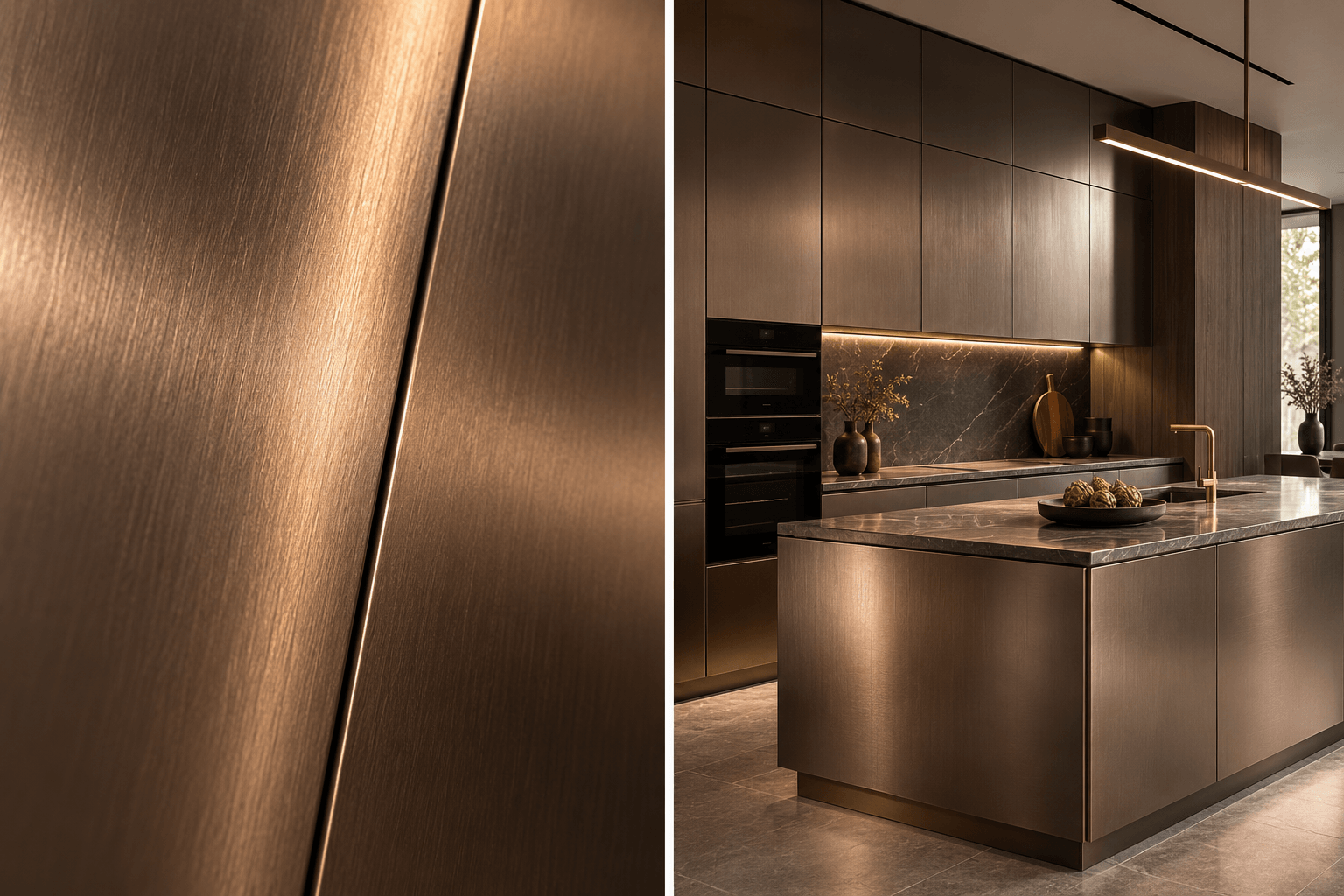
Conventional metallic paint primarily changes colour and adds pigment sparkle. Satin metal gains a directional structure, so light reveals it differently from different angles.
The finish is visually closer to worked sheet metal. It looks calm and architectural across a large plane and reveals fine texture at close range.
Conventional metallic paint creates sparkle and colour. A satin surface reads as a material and changes with the light.
Why the surface looks authentic
The effect combines an even prepared base, a decorative metallic layer and clear protection. On MDF, the cycle begins with a dense sandable polyester primer.
A satin surface reveals light and does not forgive poor geometry or rough preparation. Correct setup gives metallic depth without making the part from metal.
Five core colour directions
SteelGoldBronzeCopperLead
The final shade also depends on the colour base, matt level and cycle design.
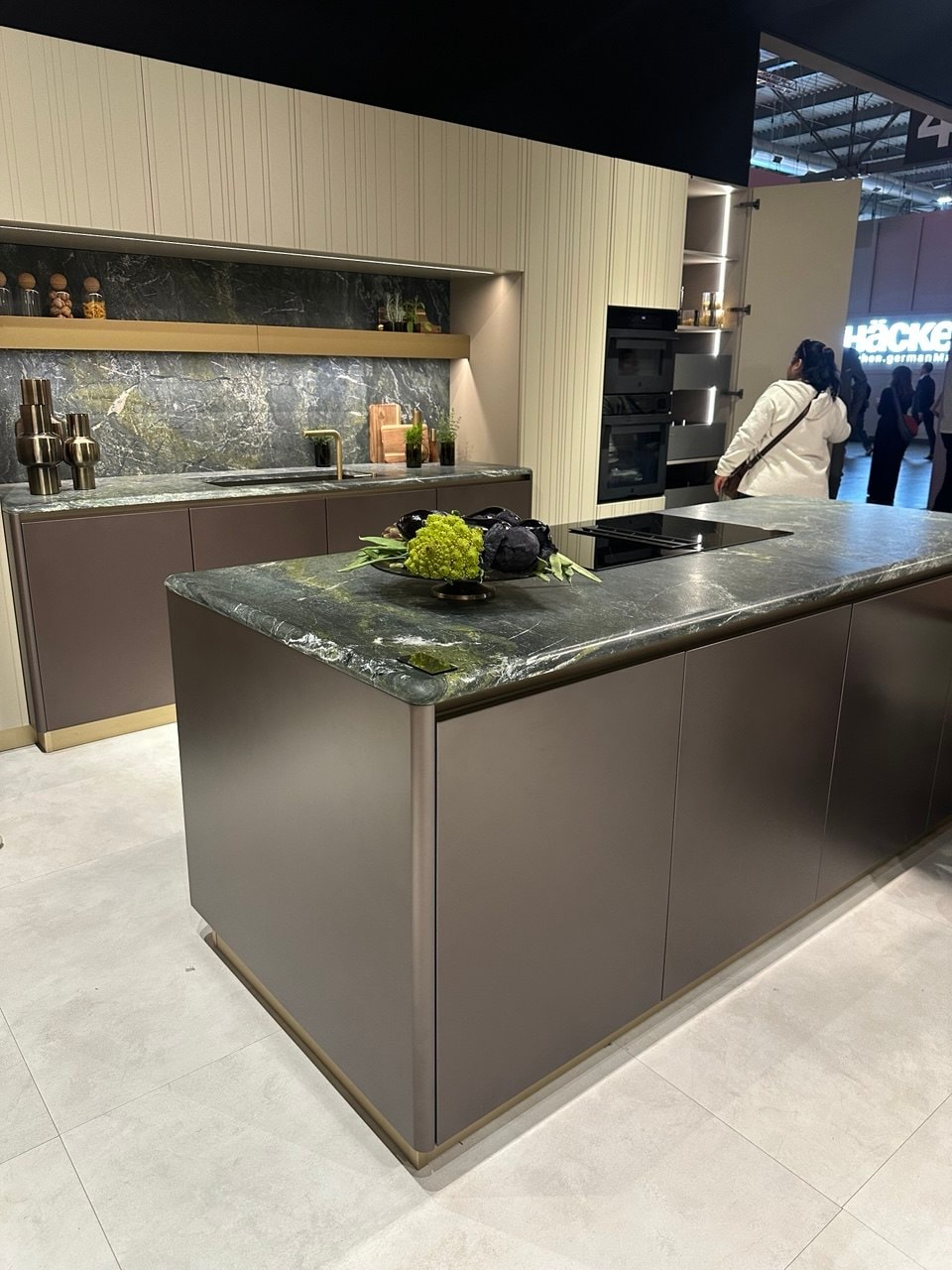
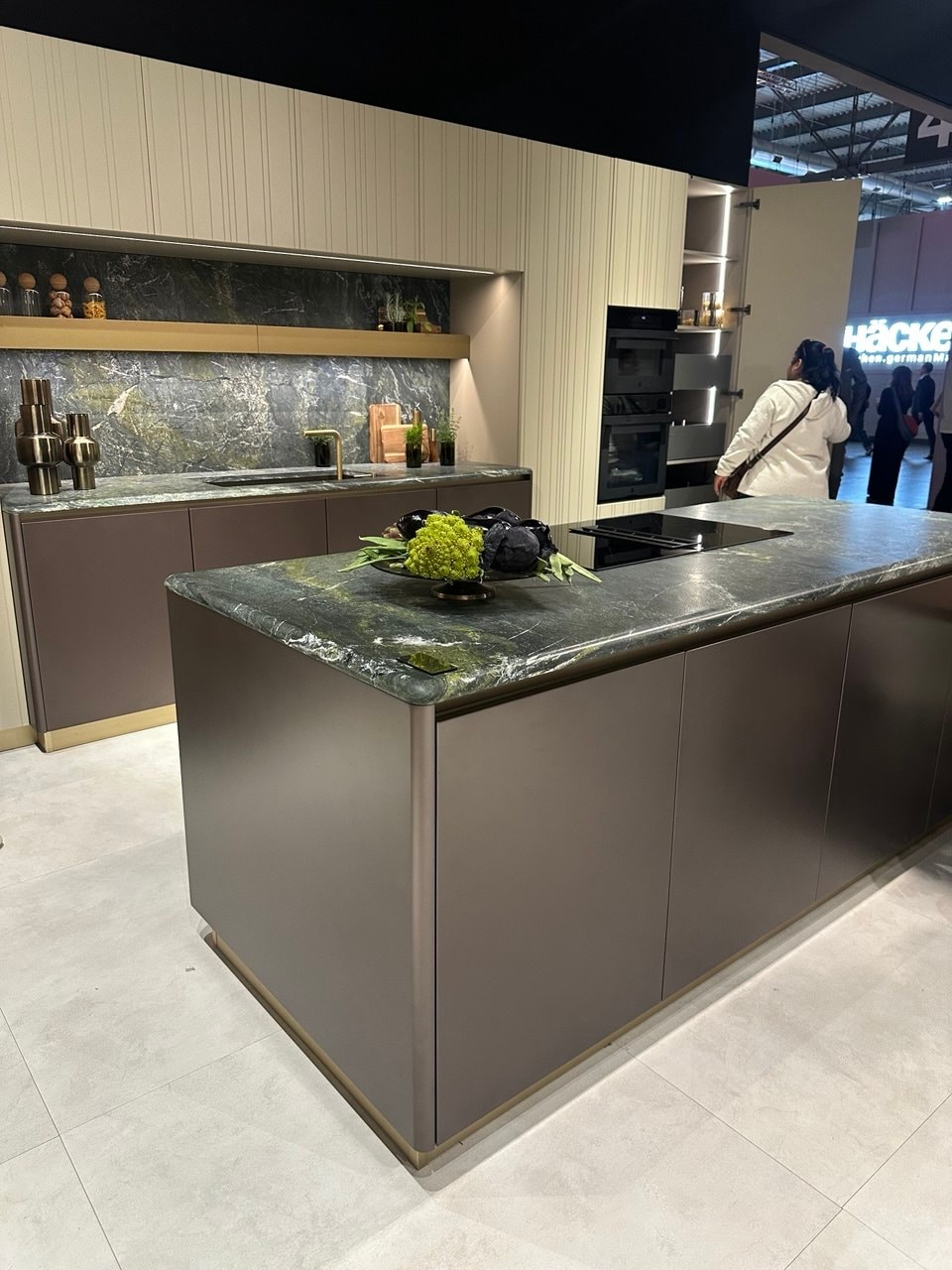
Kitchen fronts and islands
Large planes reveal subtle metallic shifts.
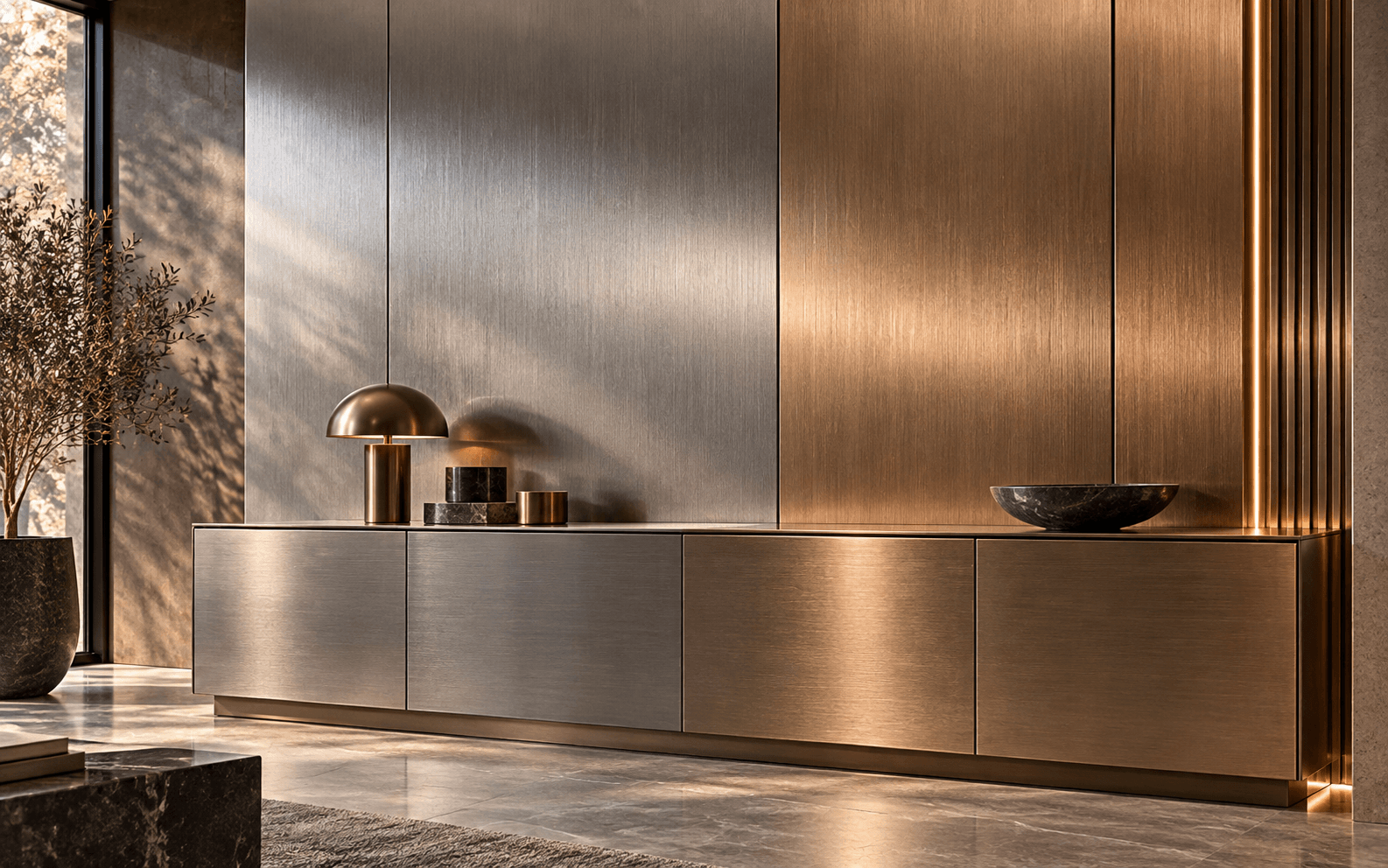
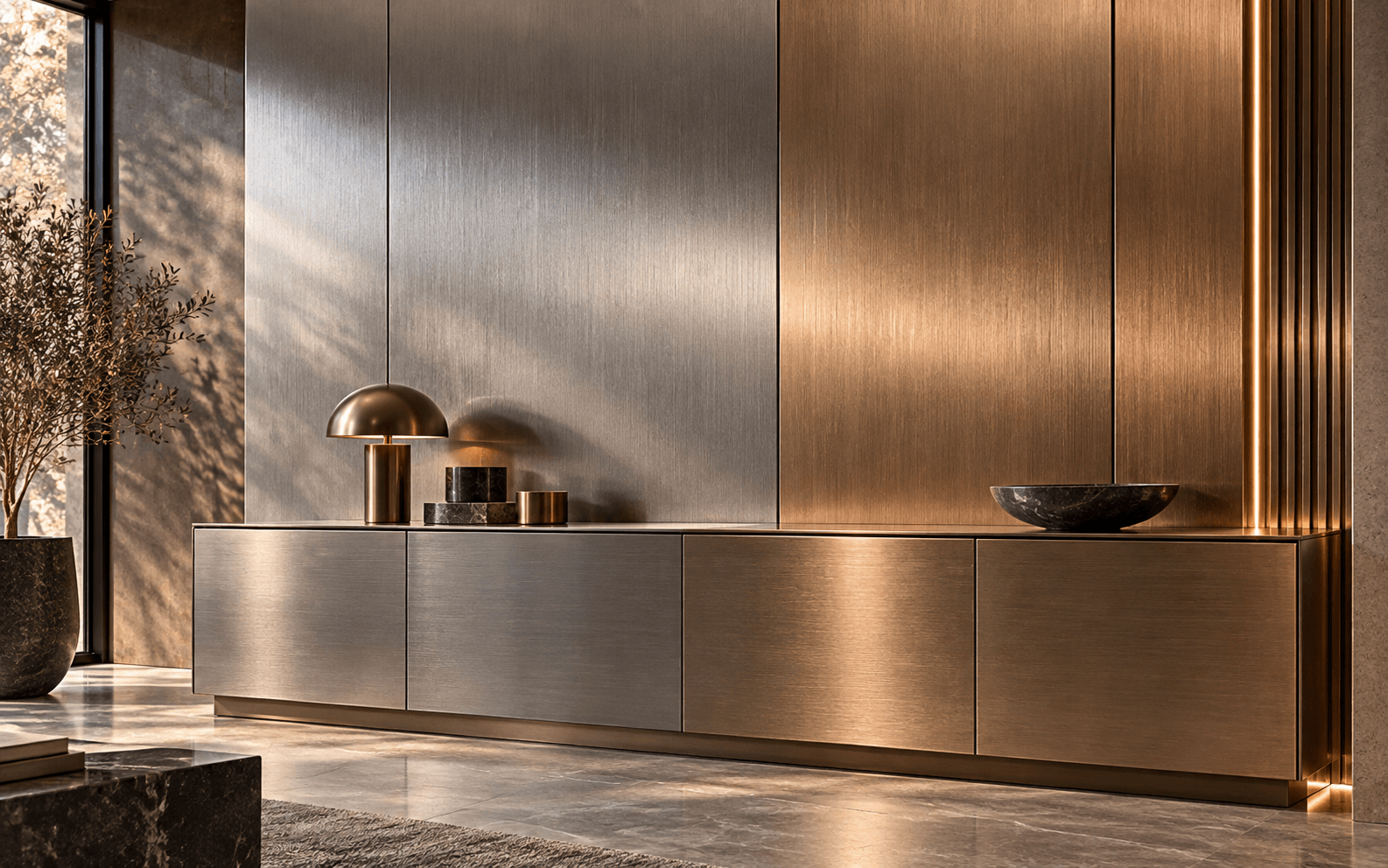
Wall panels and doors
The metallic motif continues from furniture into architecture.
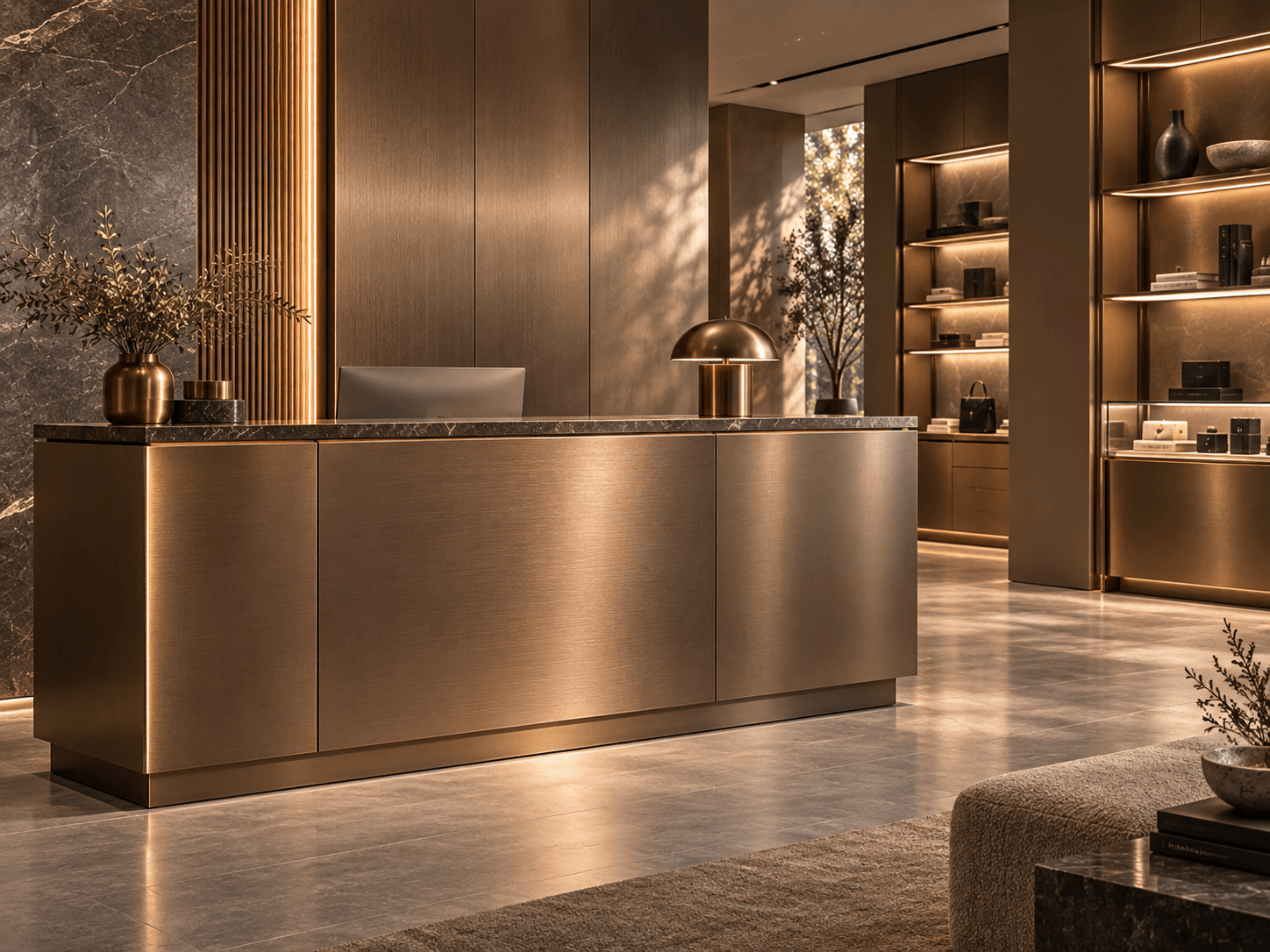
Reception desks and fixtures
A functional object becomes a visual centrepiece.
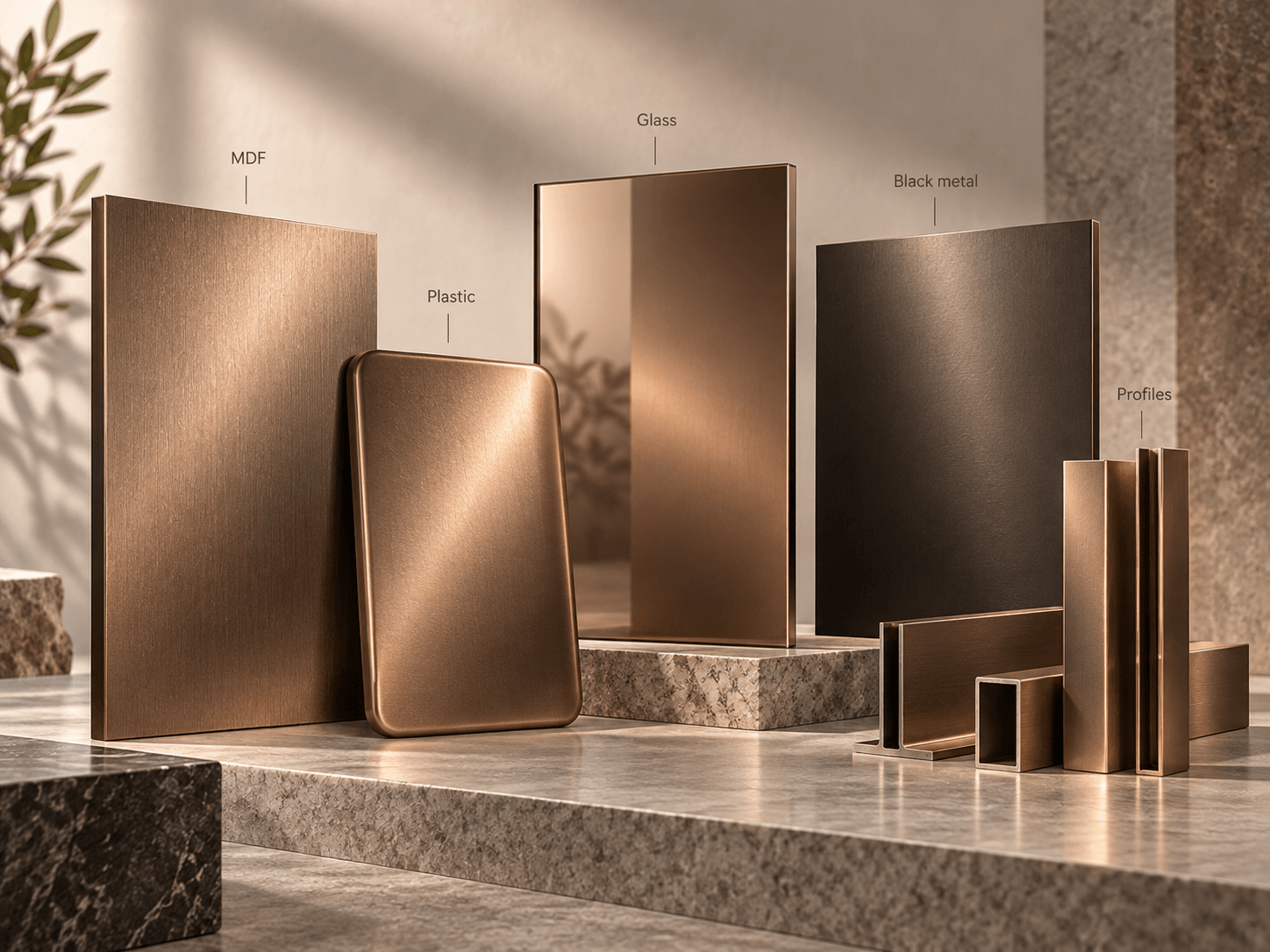
Different substrates
MDF, plastic, glass and metal each receive dedicated preparation.
How the result is built
We show the system logic publicly; a technologist selects the formulation, compatibility, intervals and application regime for the production setup.
01PF297EC — MDF preparationFor MDF it forms a dense white sandable base. Preparation for other substrates is selected separately.02OP385G90 — gloss colour baseCreates an even background and determines the depth of the metallic shade.03VMA — URBAN MATTER decorative layerCreates the metallic shade and directional character of the satin surface.04OAC363 — clear protective finishSeals the result and provides the required durability and gloss level.
Beauty begins with light
Satin metal reveals itself in motion: as the light angle changes, some areas brighten while others gain depth. This sets it apart from a flat metallic colour.
The material pairs naturally with stone, natural wood, glass and deep matt colours.
Metal effects are not one technology
Satin metal is a distinct direction. More reflective, bright, aged and chrome effects require different materials and cycle designs.
System components
PF297EC — MDF preparation
For MDF it forms a dense white sandable base. Preparation for other substrates is selected separately.
OP385G90 — gloss colour base
Creates an even background and determines the depth of the metallic shade.
VMA — URBAN MATTER decorative layer
Creates the metallic shade and directional character of the satin surface.
OAC363 — clear protective finish
Seals the result and provides the required durability and gloss level.
Launch your own collection of metallic surfaces
FarbyPRO helps select the substrate, assemble the system, produce initial samples and document working parameters for stable repeatability.
Open the URBAN MATTER ready solution to see the complete four-layer cycle and related products.