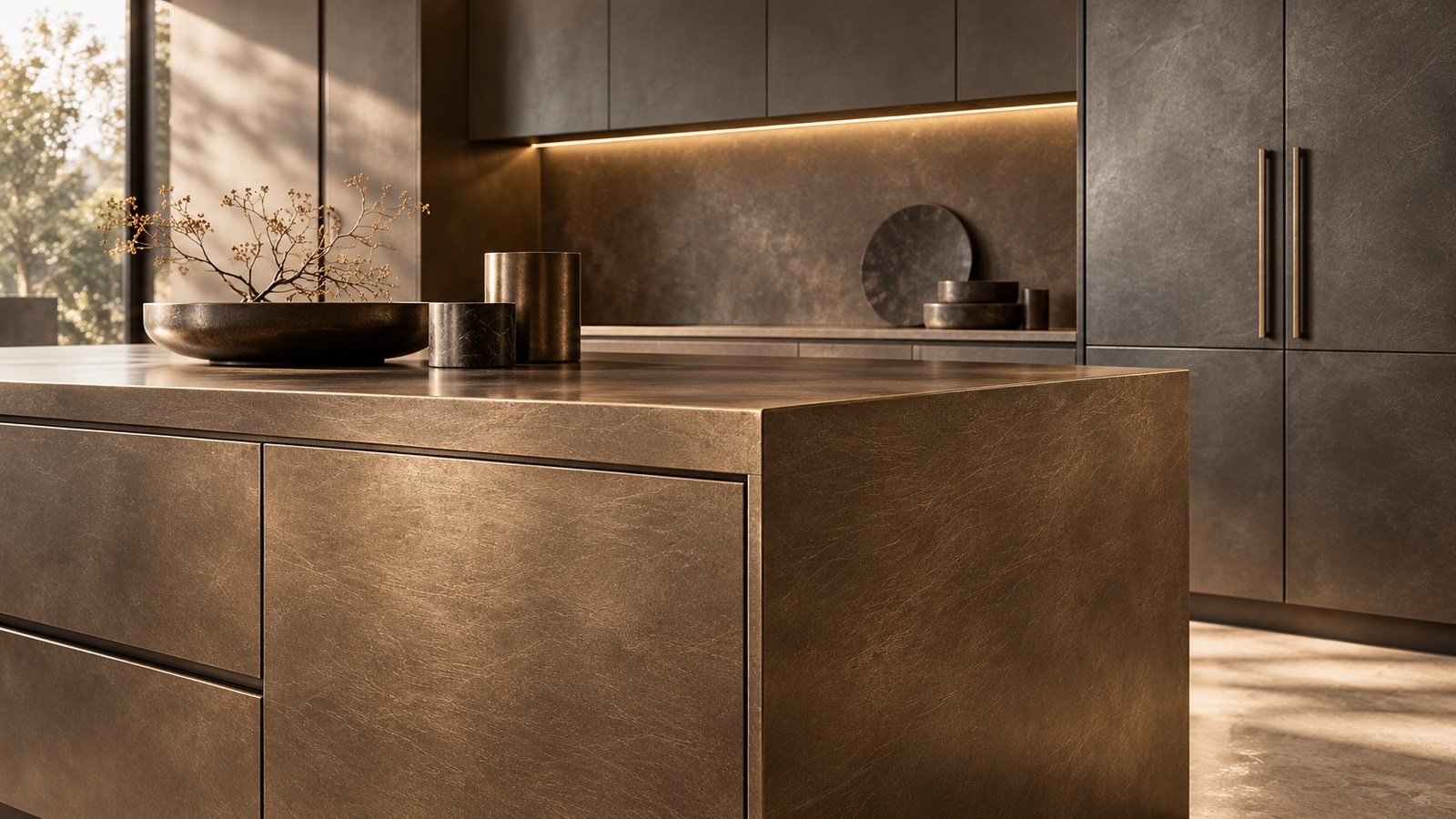
Metal in interiors is no longer limited to sheets of steel, copper or bronze. Modern coating systems can reproduce a metallic surface on MDF and other interior elements, offering more freedom of form and design.
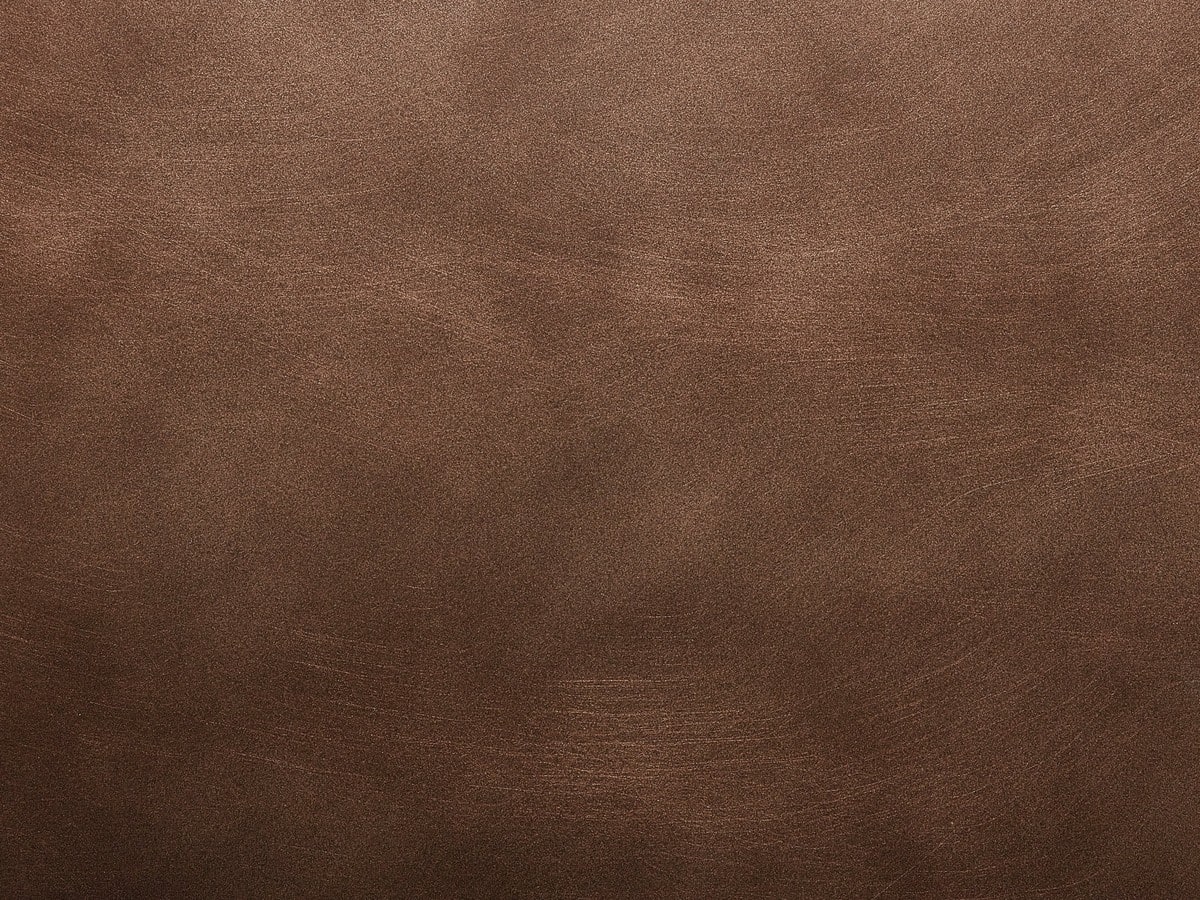
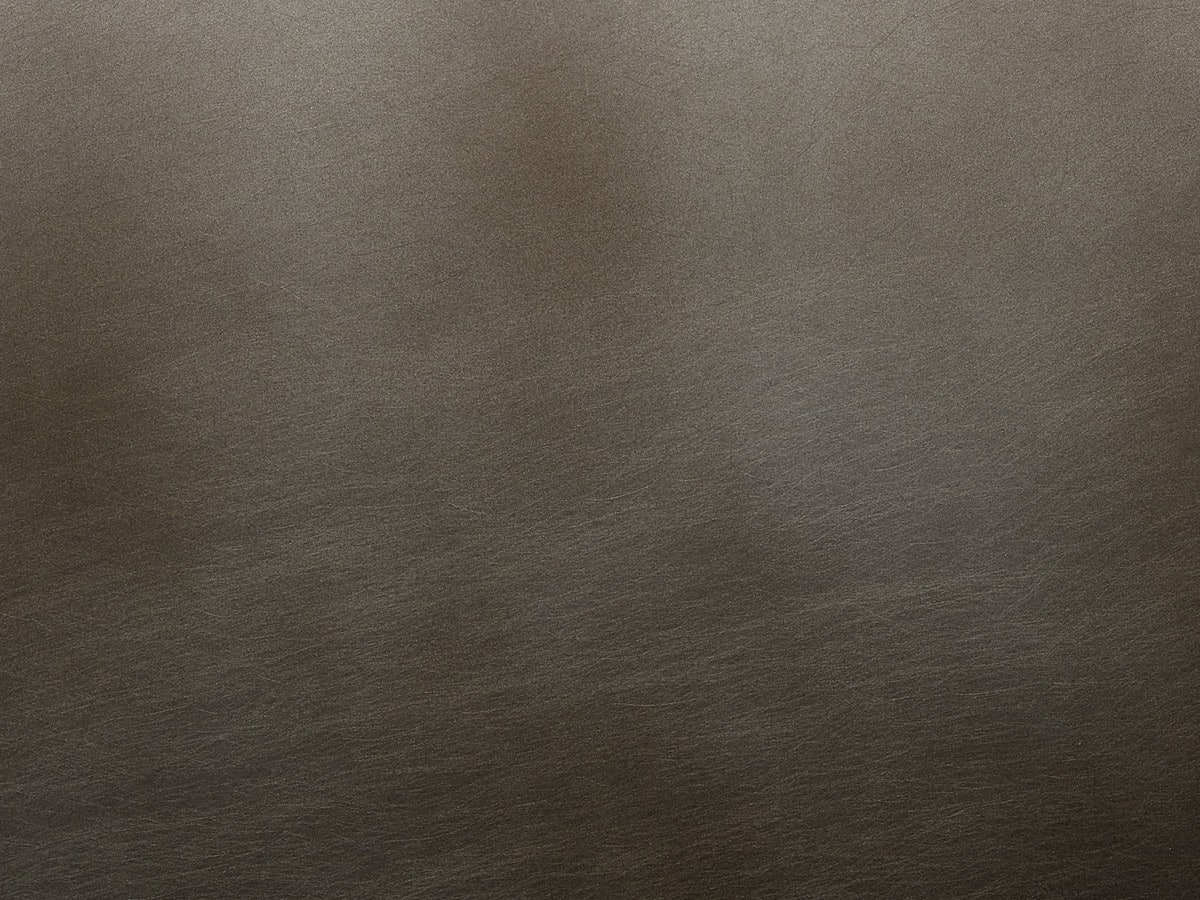
ICA’s URBAN MATTER creates a satin metal effect. Additional surface treatment produces a more complex aged finish with scratches, varied sheen and visual patina.
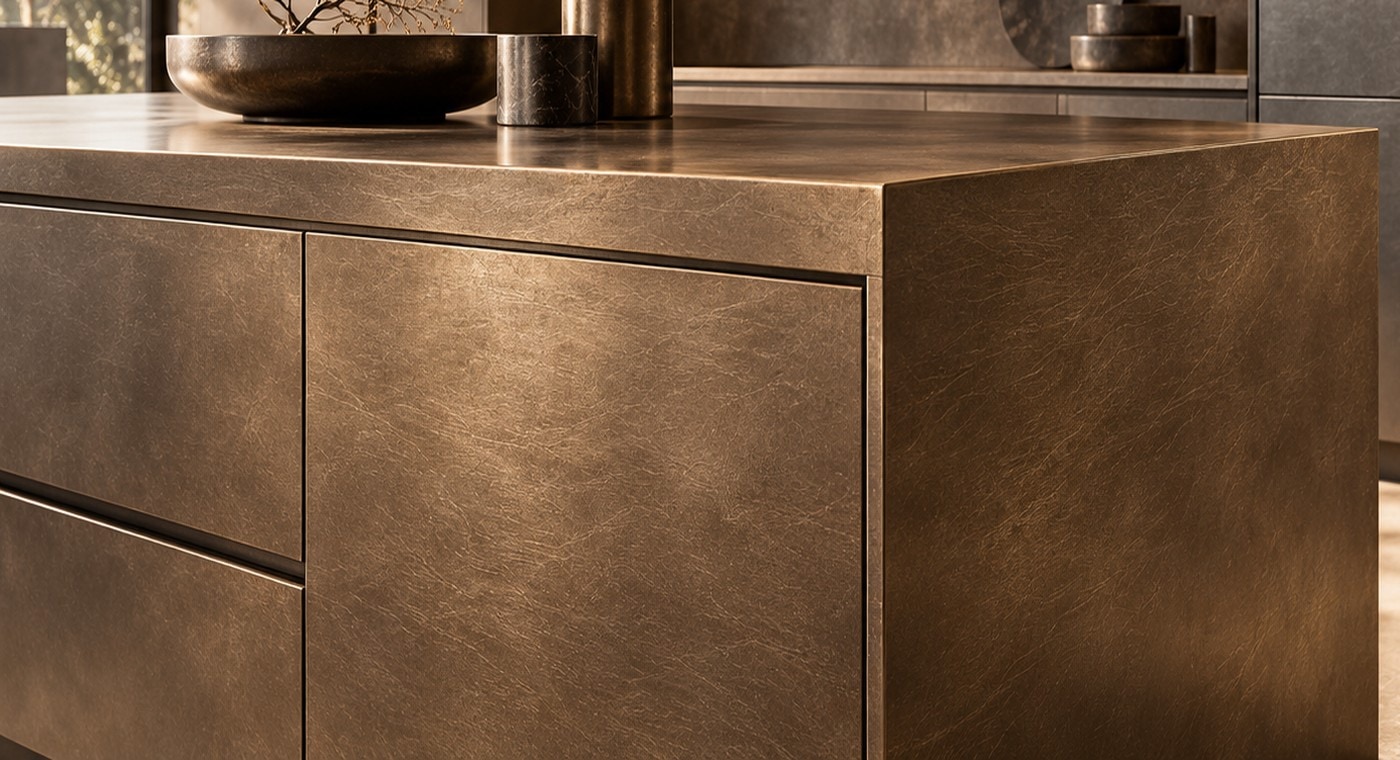
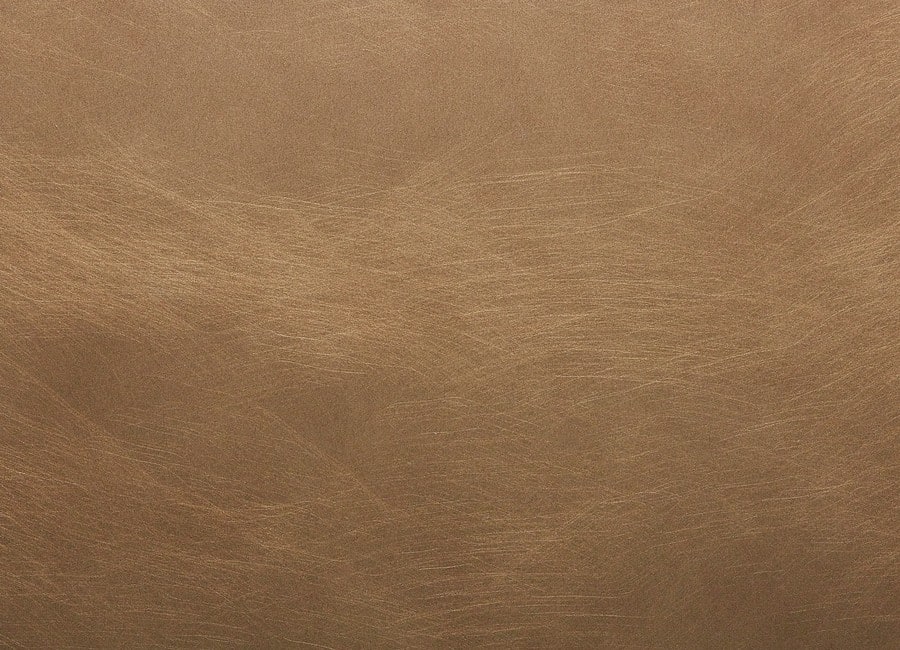
Close-up of an aged-metal furniture front
What makes aged metal different
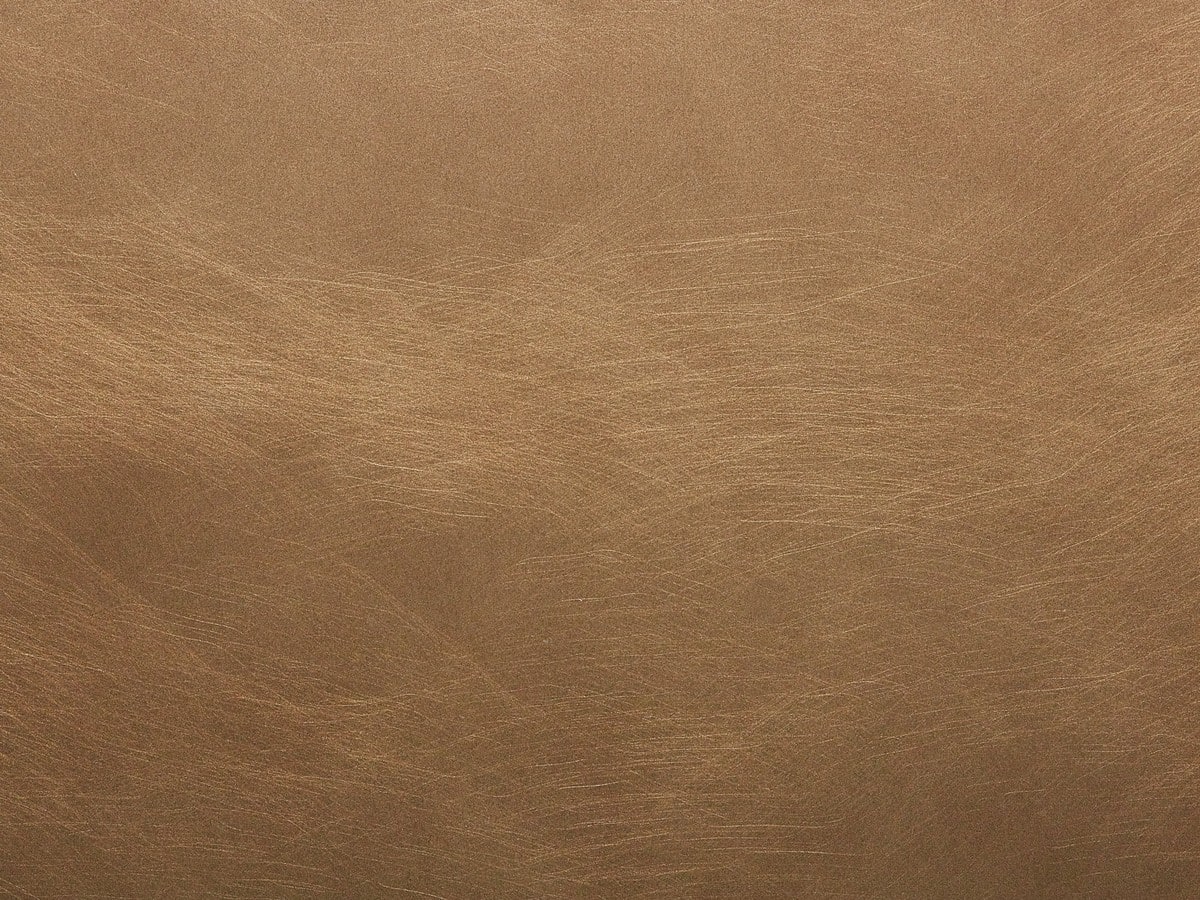
A conventional metallic finish creates colour and lustre. Here, directional and irregular marks, varied reflection and visual patina give the surface more depth.
Controlled variation makes the coating read like worked metal, especially across large surfaces.
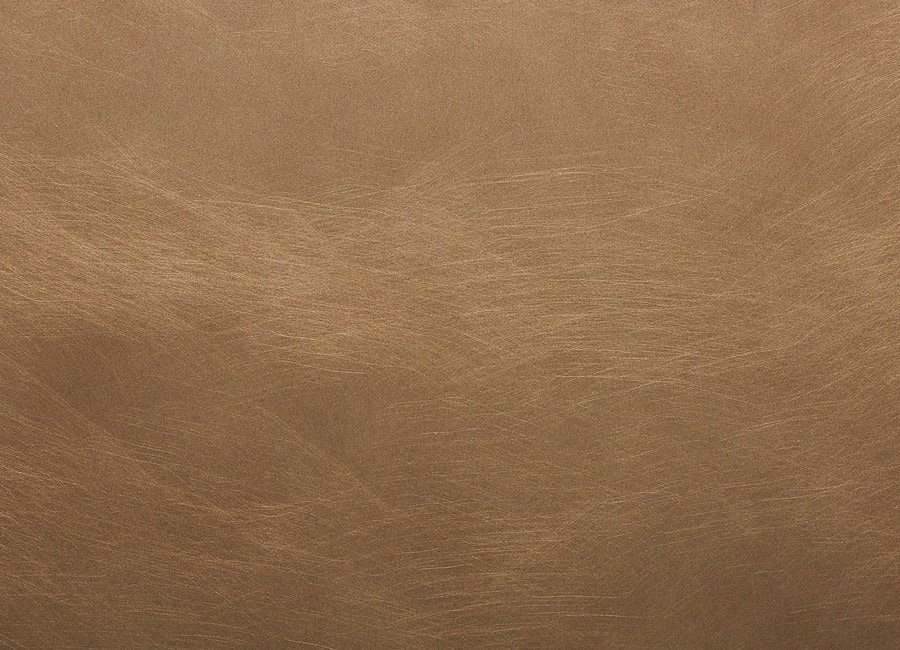
Smooth metal and an aged finish
Smooth metallic effectAged surface
The comparison shows how texture and reflection change; the final result depends on the approved sample.
Five metallic shades
SteelGoldBronzeCopperLead
The URBAN MATTER base range includes steel, gold, bronze, copper and lead. Additional treatment gives each colour its own character.
The character of each shade
Aged bronze
Deep and varied; scratches and changing reflections suggest a surface that has evolved over time.
Aged copper
A warm, expressive surface with worked marks and the character of real metal.
Antique gold
Quieter and deeper than bright gold; the colour reads as material rather than decorative shine.
Aged steel
A cool metallic character for minimalist interiors; scratches emphasise the shape of each element.
Lead
A dark, restrained graphite character without a strong shine.
How the aged effect is made
The appearance depends on the sequence of preparation, surface treatment, metallic coating, ageing and protective finish. The complete process is approved on a sample before serial production.
01Substrate preparationAn even, stable base.02Clear layerThe base for later treatment.03Orbital treatmentDirectional and irregular marks.04Metallic layerA satin metallic base.05Ageing effectPatina, depth and variation.06Protective finishSeals the result for use.
Large furniture surface with an aged-metal effect
Suitable surfaces
The metallic look can be created on MDF, melamine, plastic, glass and metal. Preparation and the full coating cycle are selected for each substrate.
MDF: fronts, panels and shaped parts
Melamine: furniture and interior surfaces
Plastic and glass: after suitable adhesion preparation
Metal: a consistent look across substrates
Where aged metal works best
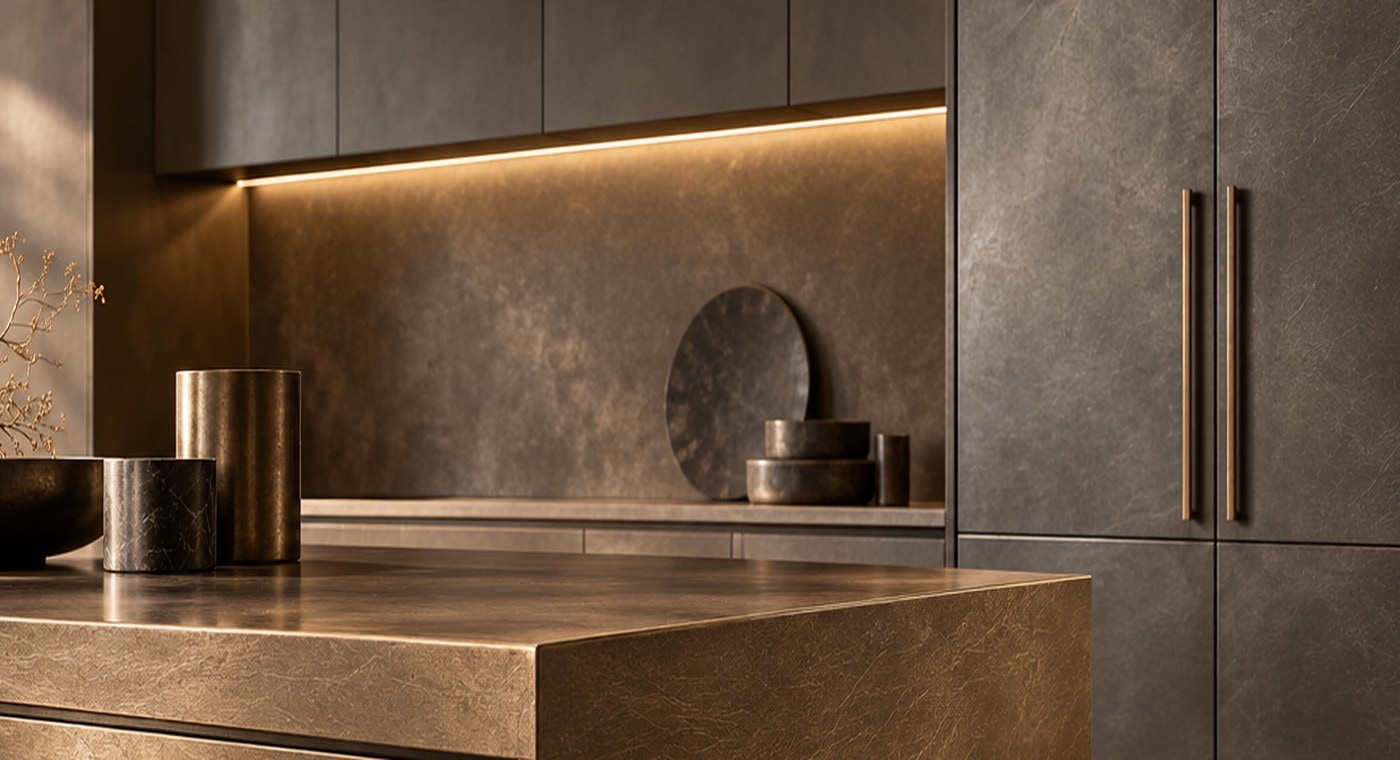
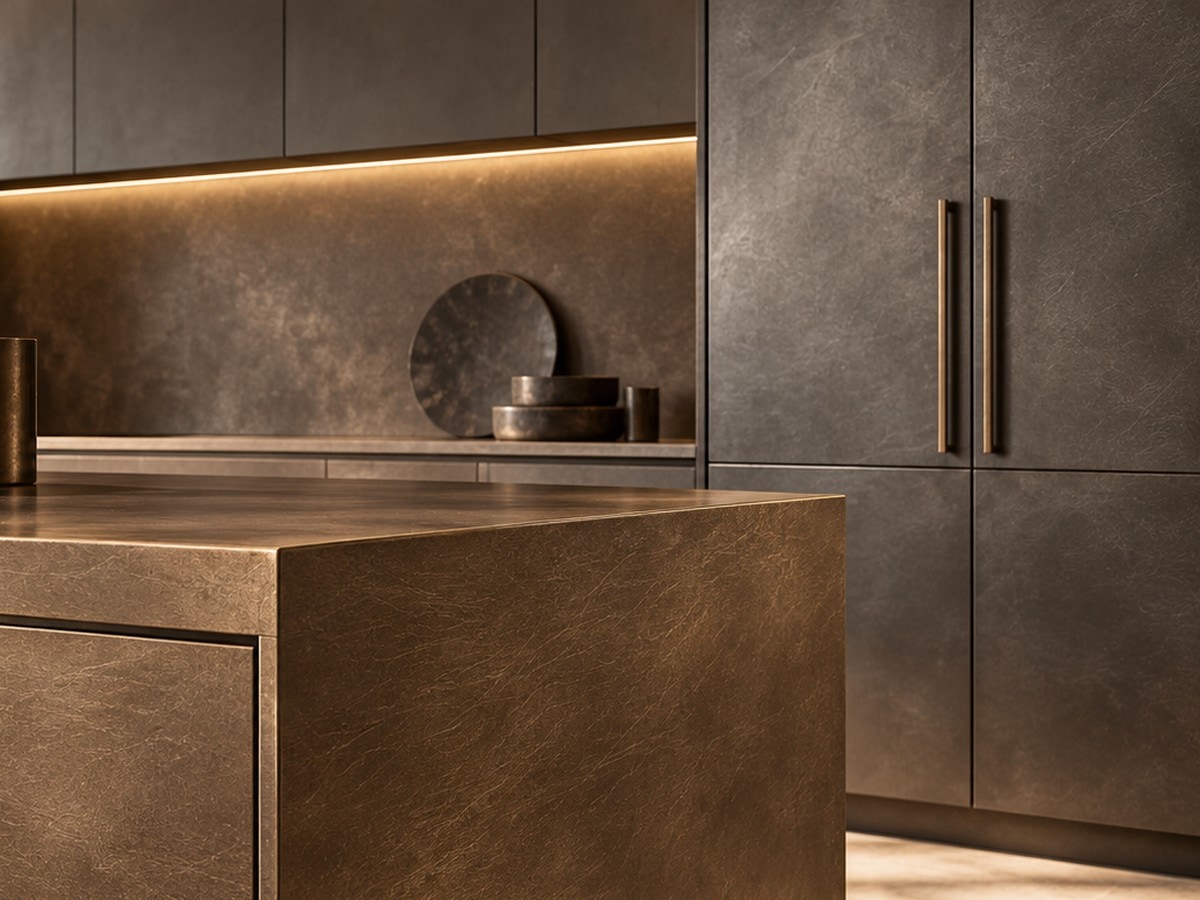
Large surfaces show the treatment marks and changes in light most clearly: kitchen fronts and islands, wall panels, doors, reception desks, display units and retail fixtures.
Beyond a conventional metallic paint
Conventional metallic paint produces a uniform colour. Aged metal develops its character through controlled variations in scratch direction, treatment intensity and patina.
The surface should be technically repeatable while retaining the natural character of hand finishing.
Patina and scratch texture
A decorative interpretation of metal
This is a coating system that reproduces the look of satin and aged metal on an interior product. It is not a chemical ageing process for real copper, bronze or steel.
Protecting the decorative effect
A final clear layer preserves the appearance and makes the decorative effect a practical coating system for furniture and interiors.
Substrate preparation → surface formation → metallic effect → ageing → protective finish. Service properties depend on the complete, approved process.
Satin or aged metal?
Satin metal has a cleaner, calmer appearance; an aged finish adds patina, scratches and changing reflections. The first suits a restrained contemporary interior, the second a stronger visual accent.
Let’s tailor the effect to your production
Substrate, shade, ageing character, equipment and protective finish shape the result. First we make and approve a control sample, then set the parameters for repeatable production.